
Function

A forest’s role in supporting wildlife, protecting water and soil, offering recreational opportunities, and contributing to local economies.
Resilience

A forest’s ability to withstand and adapt to storms, pests, disease, and other disturbances while becoming or remaining structurally and functionally intact over time.
Forest Health
Because forests are valued for many reasons - from wildlife habitat to timber production - there’s no single universal definition of “forest health.” The Deciduous Forest Framework, with a focus on private working lands, defines forest health as the overall resilience, productivity, and function of a forest.
Productivity

A forest’s capacity to grow timber and provide other natural resources.
Healthy forests are better able to endure pressures and threats, support landowner goals, and provide the many benefits people and wildlife depend on.

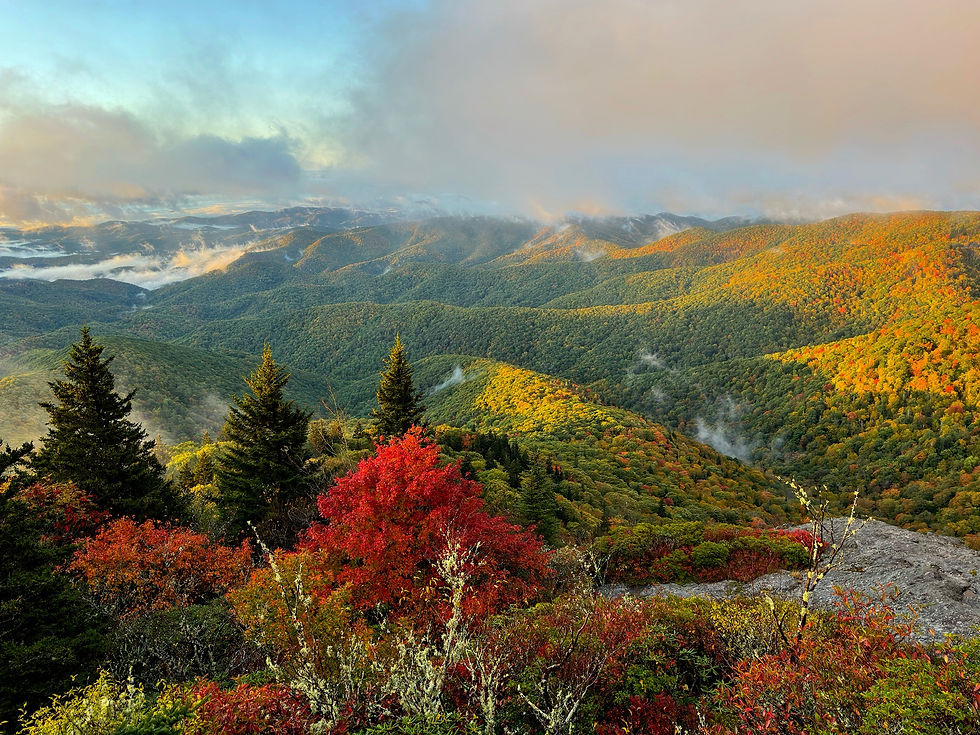
Photo: Alex Levine, IUP RI
Photo: Alex Levine, IUP RI

Photo: Wikimedia Public Domain

Photo: Ron Rohrbaugh, IUP RI
Forests at Risk
Many eastern forests look healthy at a glance - lush leaves, shaded earth, and cool air give the impression of thriving ecosystems. But appearances can be deceiving. Changing disturbance regimes that once shaped forests, combined with new and growing threats, has left many stands less resilient.
While natural disturbances can be beneficial for forests, they can also threaten people and property. For generations, people worked hard to prevent them – suppressing fire, mitigating floods, controlling insects. These efforts provided short-term benefits to people, but kept forests from naturally sustaining their structural and compositional diversity. Meanwhile, threats like invasive plants and introduced diseases caused forests to degrade even further. The result is an expanse of forests that lack the diversity, structure, and regeneration needed to support their long-term health.
Because these forest health challenges are connected, solutions must be as well. A strategic approach to forest management - one that considers how different threats influence each other and how best to combat them together - is the most effective way to protect and restore forest health. The Deciduous Forest Framework, supported by the best available science, considers these interactions when developing guidance, recommendations, resources, and tools.
Photos: Wikimedia Public Domain
Diversity in Age, Diversity in Wildlife
Eastern deciduous forests provide essential habitat for an incredible range of wildlife species, from colorful migratory birds to reclusive amphibians to lumbering black bears. Over 1,000 forest-dependent plants and animals in the eastern U.S. are listed as Species of Greatest Conservation Need. Valuable game animals like Wild Turkey, Ruffed Grouse, and American Woodcock also need healthy forests to remain part of the American landscape. All of these species have unique requirements to survive, and each forest age class provides its own specific conditions for wildlife. Some animals can only be found in forests of certain ages, making diverse forest conditions essential for sustaining healthy wildlife populations.


Young forests are the first stage of forest growth. They contain dense patches of sun-loving shrubs, wildflowers, grasses, and small trees usually under 20 feet tall that provide abundant food and essential cover for wildlife. Across the East, the area of young forests declined sharply as woodlands and abandoned farms aged into uniform, middle-aged forest stands. As this habitat disappeared, so did the species that depend on it. Eastern box turtles, American Woodcock, Ruffed Grouse, Golden-winged Warblers, Eastern Whip-poor-will, and Prairie Warblers are all in decline. Restoring young forest is key to keeping these species on the landscape.
Young forests can be created using NRCS conservation practices including silvicultural harvest and brush management.
Photo: Alex Levine, IUP RI
Photo: Alex Levine, IUP RI
Photo: Darin J. McNeil, IUP
Young Forests
Photo: Darin J. McNeil, IUP
Open Forests

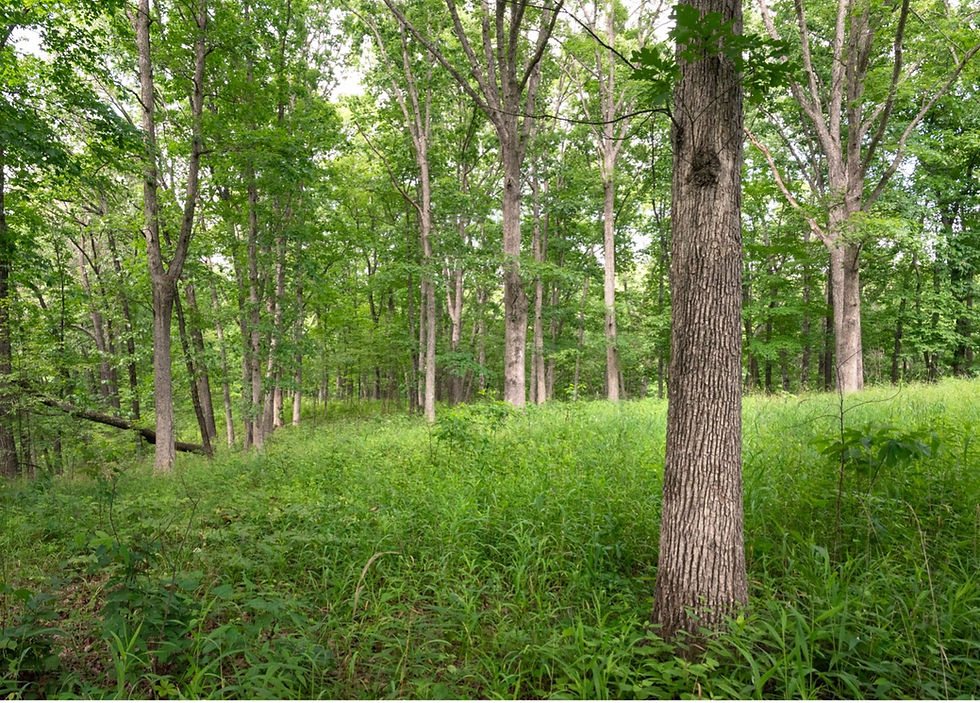
Open forests - also called woodlands - have variably spaced trees and open canopies that let sunlight reach the ground. Once common, these transitional forests declined as land was converted for human use and fire suppression allowed them to grow into closed-canopy forests. Open forests require periodic disturbances to keep canopies open, limit woody plant growth, and sustain sun-loving native grasses, wildflowers, and shrubs.
Oak trees regenerate best in the sunny patches of open forests. They thrive when forests are open and dynamic; when forests are close-canopied, they do not. Oaks, declining in many eastern forests, provide food and shelter for animals and form the core of the U.S. forest products industry. These woodlands support an impressive mix of wildlife including game species like Wild Turkey and deer, as well as declining species like the Eastern Whip-poor-will and yellow-banded bumblebee.
Open forests can be created and maintained through NRCS conservation practices like silvicultural thinning, brush management, and prescribed burns.

Photo: Wikimedia Public Domain
Photo: Darin J. McNeil, IUP
Photo: Courtesy of USFS
Photo: Darin J. McNeil, IUP
A mature forest is the stage just before it is considered late successional, or approaching ecological maturity. These forests are defined by large trees, closed and layered canopies, and substantial above-ground biomass. When most folks think “forest,” this is what they picture. Their shaded forest floors often support a diverse understory, and they are home to a complex array of plant and animal species, including Species of Greatest Conservation Need like the Scarlet Tanager and Northern Long-eared bat. These forests store large amounts of carbon, provide clean air and water, and are important spaces for recreation and timber production.
Healthy mature forests can be maintained with NRCS conservation practices like single tree harvesting, group selection harvesting, and thinning. Limited management facilitates late successional forests' advancement into ecological maturity.

_edited.jpg)
